 Jacksonville Bankruptcy Lawyer Blog


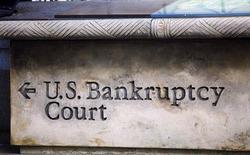 In recent weeks bankruptcy courts and the associated United States Trustee Program have begun to increase the scrutiny with which they are looking at requests to proceed with foreclosures and requiring the foreclosing lender to prove that they are the proper party to foreclose on the property. Bankruptcy courts in New Jersey and Georgia have denied to remove the automatic foreclosure stays that are put in place when a court confirms a debtor’s bankruptcy repayment plan because banks have been unable to satisfactorily prove they were the parties that actually owned the mortgages.
In order for the lenders to foreclose on a home once the homeowner has an approved repayment plan, the lender must file a motion to remove to stay and prove they are entitled to foreclose. Spokeswoman for the U.S. Trustee Program Jane Limprecht verified the Program’s increased scrutiny by stating it “is engaged in an enhanced review of mortgage servicer filings in bankruptcy cases to help ensure the accuracy of the claim to repayment.”
This is a positive step for those homeowners facing a Florida Foreclosure Lawsuit and are considering bankruptcy. Contact a Jacksonville Bankruptcy Lawyer or a Jacksonville Foreclosure Lawyer today to explore your foreclosure alternative options.
 Last week, Washington, D.C. Mayor Adrian M. Fenty signed into law an emergency act aimed at slowing the dramatic rate at which homes in the District of Columbia are being foreclosed upon. The Act, titled “Saving DC Homes From Foreclosure Emergency Act of 2010” puts into place several key processes that lenders and homeowners must complete before a foreclosing on a home and proceeding to a foreclosure sale.
 New data from foreclosure tracking firm RealtyTrac reveals that foreclosure activity rose in 133 of the 206 largest U.S. metro areas in the third quarter 2010, including 11 of the 20 largest metro markets. That means that foreclosure activity rose an astonishing 65% over the July to August time period. The four most foreclosure plagued states; Florida, California, Nevada and Arizona, claimed 19 of the 20 metro’s with the most foreclosure activity with Boise City-Nampa, Idaho coming in at number 14.
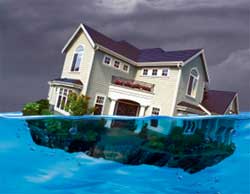 Jacksonville homes underwater. This is a question that we hear often as Jacksonville Bankruptcy and Florida Foreclosure Lawyers. In short, a deficiency judgment is a judgment for a debt that is owed after a foreclosure, i.e. the amount of money the bank was not able to recover after it forecloses on a home. Lenders are even allowed to add interest, fees and other expenses to that amount as long as their is an outstanding deficiency. While some states have laws that prevent lenders from seeking deficiency judgments, Florida is one of the states that does allow deficiency judgments to be pursued.